

I went to a poetry festival last night. Spent two hours reading work by people I’ve never heard of. Some of it felt like being hit in the chest. Most of it felt like nothing. That’s the point, I think.
For years I convinced myself taste was something you had or didn’t have. Inherited. You either got it or you didn’t. But sitting there watching people respond to a poem I didn’t understand, I realized once again that it’s just exposure. Repetition. Showing up to things that don’t immediately click.
AI makes average free. You can pump out something competent in minutes. The market’s going to flood with it (and already is to a degree). In marketing, in writing, probably everywhere, the execution part is going to be done by AI. So what’s left isn’t making things. It’s deciding what’s worth putting into the world.
We’re becoming curators whether we planned to or not.
So the only thing that actually matters is: can you tell the difference? Do you know what alive feels like versus what’s just assembled to look alive? Because soon that’s the only decision left to make.
I don’t think you’re born knowing that.
Most people won’t spend time figuring it out. Why would they? We’ll use AI to close the gap, get the draft done, ship it. That’s the rational choice a lot of the time. I get it.
But if you can feel the difference, if you’ve spent enough time with real work to recognize it, then you become the person who knows what to delete. What not to publish. What still feels deeply human when everything else becomes cheap and fast. That’s the only real skill left.
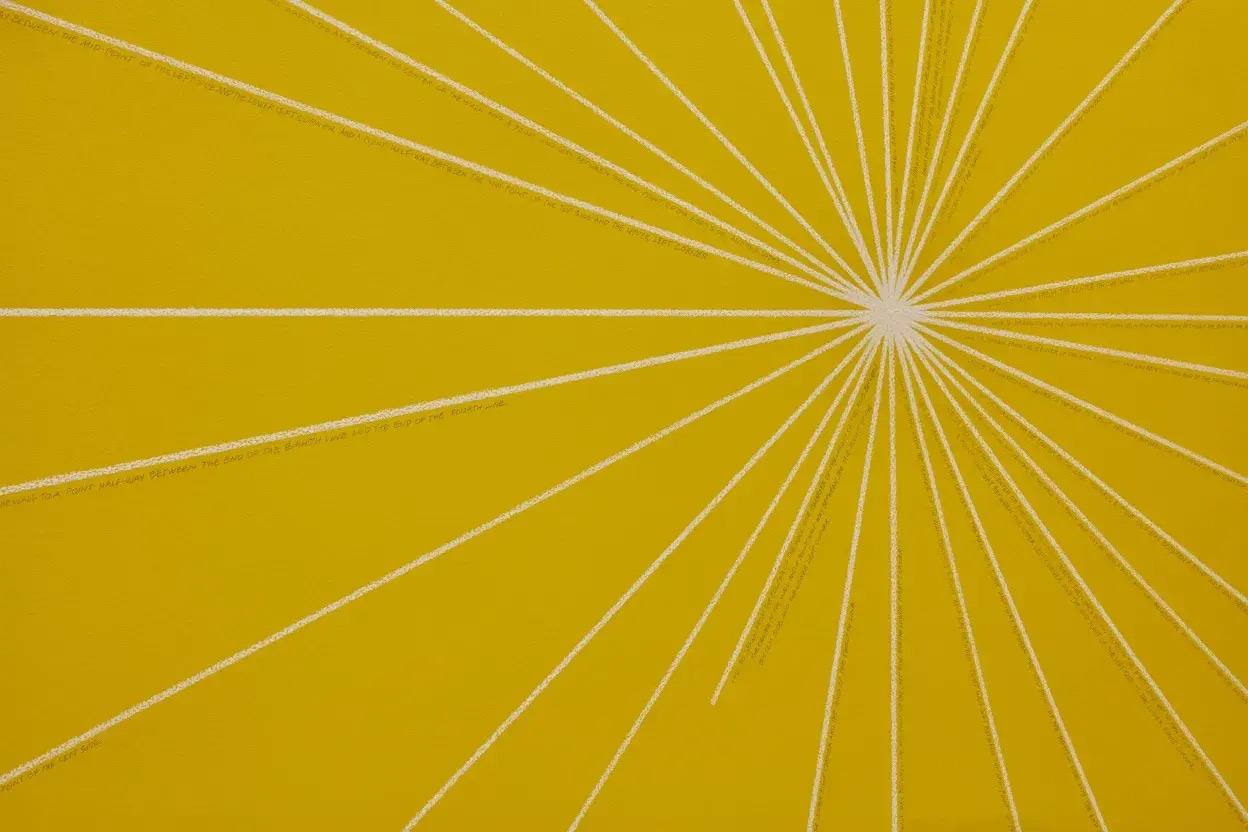
Sol LeWitt, Wall Drawing #254 (1975).
Sol LeWitt understood something about abundance: when you can generate infinite variations from a simple rule, the real skill is knowing which ones to keep. The rest is just noise.
Maybe that’s why I went to a poetry festivals on a Friday evening instead of optimizing my productivity system. Maybe this is the work that actually counts.😊
BUT DO YOU KNOW WHAT ALIVE FEELS LIKE!?